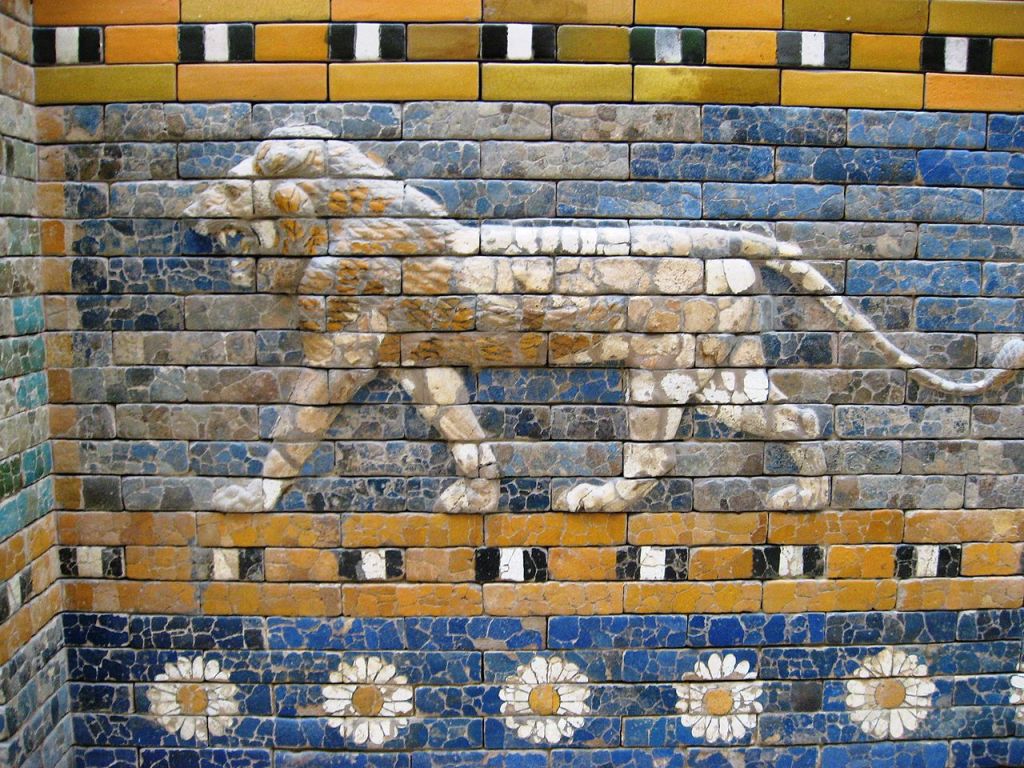
Inanna is the ancient Mesopotamian Goddess of love, war, sex, and fertility, and the history of Her worship goes back as far as 4000BCE, or over 6,000 years ago!
She was known as Inanna to the ancient Sumerians, and was eventually syncretised with the Semitic Goddess Ishtar under the Akkadian Empire of Sargon the Great.
Nowadays, the names Inanna and Ishtar refer to the same Goddess, though they started out as separate- albeit similar- figures.
Ishtar is not the only deity who was influenced by Inanna. Inanna’s mythology directly and indirectly affected those of other deities in the region, some of whom we will look at today.
How to navigate this page:
✴️ Click on one of the names in the table below to jump to the Goddess you wish to know more about.
✴️ Click on the underlined name in the title of each section to read more about that particular deity. Doing this will take you to an external link.
✴️ Click on any underlined words or phrases to read more about that topic. Doing this will also take you to an external link.
✴️ Click on any of the deities’ images to bring you back to this position.

Image: Depiction of Ishtar on an Akkadian seal. From Wikipedia.
Ishtar – Akkadian/Babylonian/Assyrian
A Semitic Goddess in origin, Ishtar’s cult became closely associated with Inanna’s after Sargon of Akkad conquered the Sumerian city-states.
Ishtar was associated with love and war, and She was also the Goddess of political power and kingship. Kings of Akkad validated their rule through sacred, symbolic marriages to Ishtar, which gave him divine approval for the throne.
Sargon’s daughter, Enheduanna, was the High Priestess of the moon God Nanna in Ur. However, she is best known as the earliest recorded author in human history (so far!), with some of her best known works composed in honour of Inanna.
Although not explicitly named in the Christian Bible, it is believed that the repeatedly condemned worship of the “Queen of Heaven” refers to Inanna/Ishtar, or another related Goddess such as Ashtart/Astarte.
It is also possible that the symbolic figure of the Goddess of Babylon, known by the more derogatory Whore of Babylon, or the Mother of Harlots and Abominations of the Earth, may have been based on the Goddess Ishtar.
However, it is important to note that the Whore of Babylon is just a metaphorical representation of what the Bible perceived pagan cultures to be; idolatrous, sinful, and corrupt.
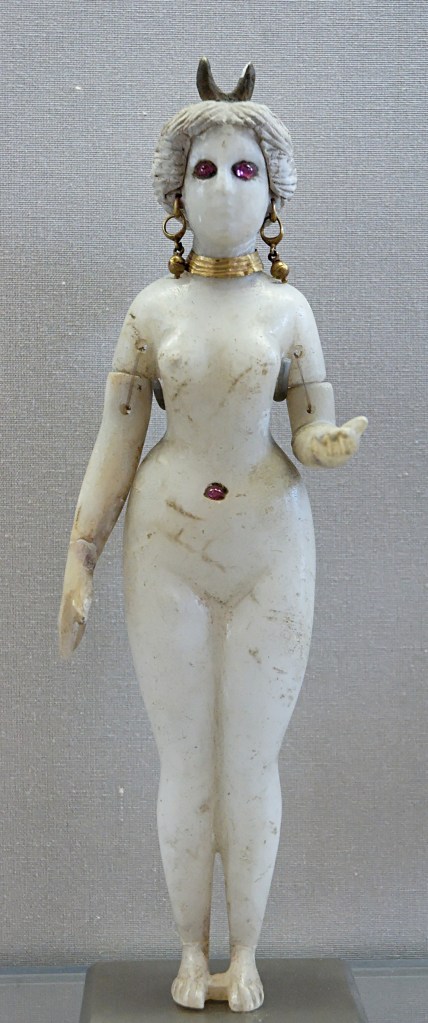
Image: Statuette of a Goddess with a crown of horns, possibly of Ishtar. Made of alabaster, gold, terracotta, and rubies. From Wikipedia.
Ashtart/Astarte – Canaanite/Phoenician
Astarte is the Hellenised form of the name Ashtart, who was another Semitic Goddess of love, beauty, sex, war, and hunting. She was also associated with sexuality, healing, and royal power, and was also attributed as a sea Goddess by the seafaring Phoenicians.
Thanks to the dissemination of Phoenician culture around the Mediterranean, Ashtart’s worship was adopted by the Greeks, especially in Cyprus. They eventually gave her a new name: Aphrodite.
Ashtart was considered a sister of the Goddess Anat, though the two have so many similarities that some believe Them to have originally been one Goddess. The combination of the two Goddesses is also believed to have led to the evolution of the name of Ataratheh/Atargatis, a Syrian chief Goddess.
It is primarily through Ashtart that many of the following deities were influenced by Inanna/Ishtar.
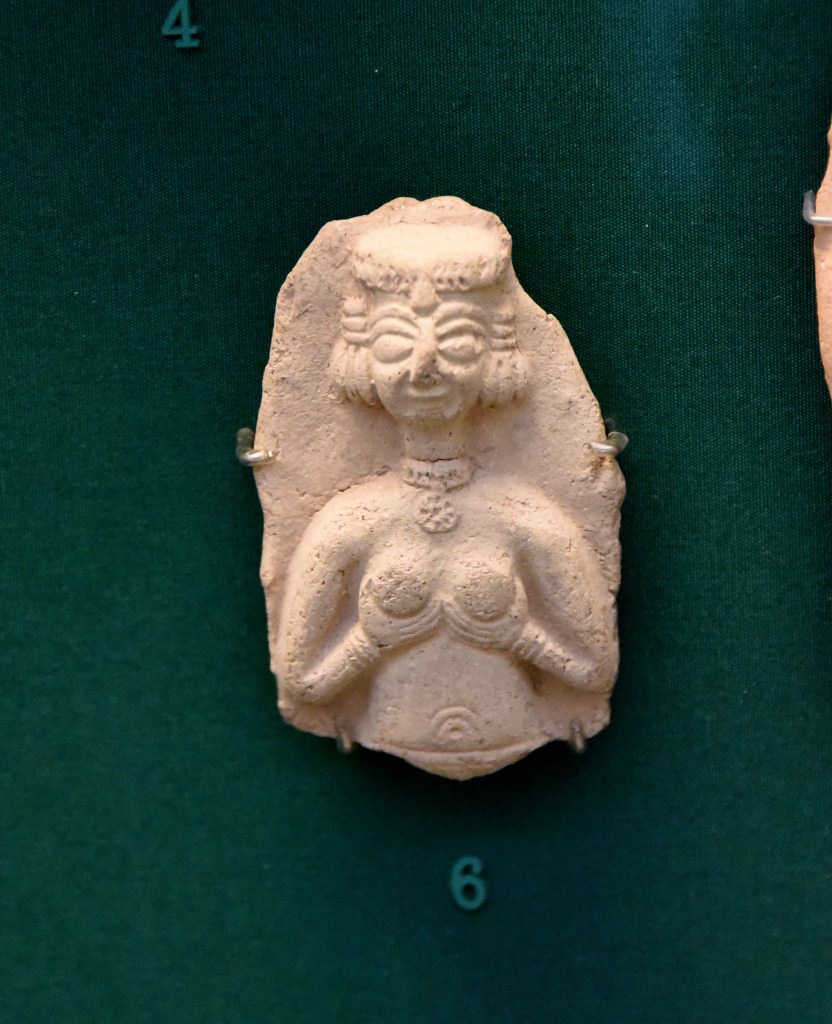
Image: Plaque of Astarte from Alakh, by Osama Shukir Muhammed Amin. From World History Encyclopedia.
Shaushka – Hurrian/Hittite
Shaushka was the highest ranked Goddess in the Hurrian pantheon, and is the Goddess of love, war, sex, and healing. Most of what we know from the Hurrians are through Hittite translations, so it is possible that some information may be incomplete or incorrect.
In matters of love and fertility, Shaushka guaranteed conjugal love, was able to take away or return potency, and also had the ability to turn man into woman, and woman into man.
In matters of war, Shaushka was depicted as a heroine, as well as a staunch supporter of Her brother, the weather God Teshub. Narratives about Shaushka describe Her epic battles against other Gods and monsters, illustrating her prowess as a warrior.
She also had both feminine and masculine attributes, as seen in Her inclusion in both a procession of Gods and a procession of Goddesses in Yazılıkaya. She is often depicted flanked by her two attendants, Ninatta and Kulitta.
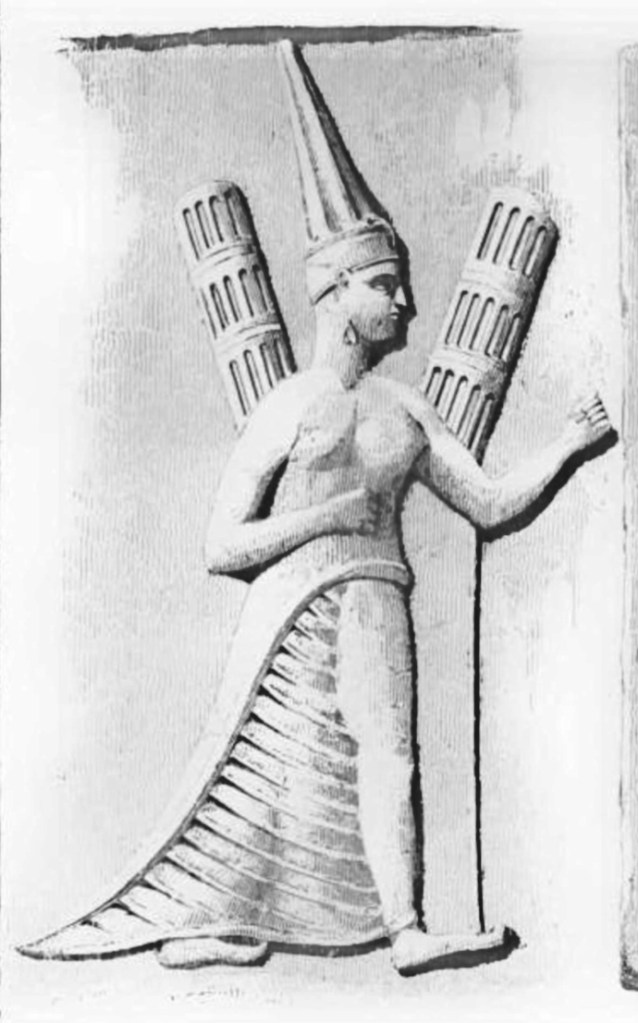
Image: Engraving of a relief depicting Shaushka. From Wikipedia.
Attar/Attart/Atarsamain – Levantine/Arabian
Attar (masculine)/Attart (feminine), also known as Atarsamain, is a God whose gender is unspecified, though They are referred to as both male and female in accounts across the Ancient Near East.
Atarsamain in particular was associated with the planet Venus, and was worshipped by Arab tribes in the pre-Islamic era. He was a part of a divine trinity of astral Gods, consisting of the Sun Goddess, Nuha, and the Moon God, Ruda.
Although not much is known about this deity, it is believed that He may be the same deity as al-Lat, a prominent pre-Islamic Arabian Goddess who was once worshipped extensively throughout the Arabian Peninsula.
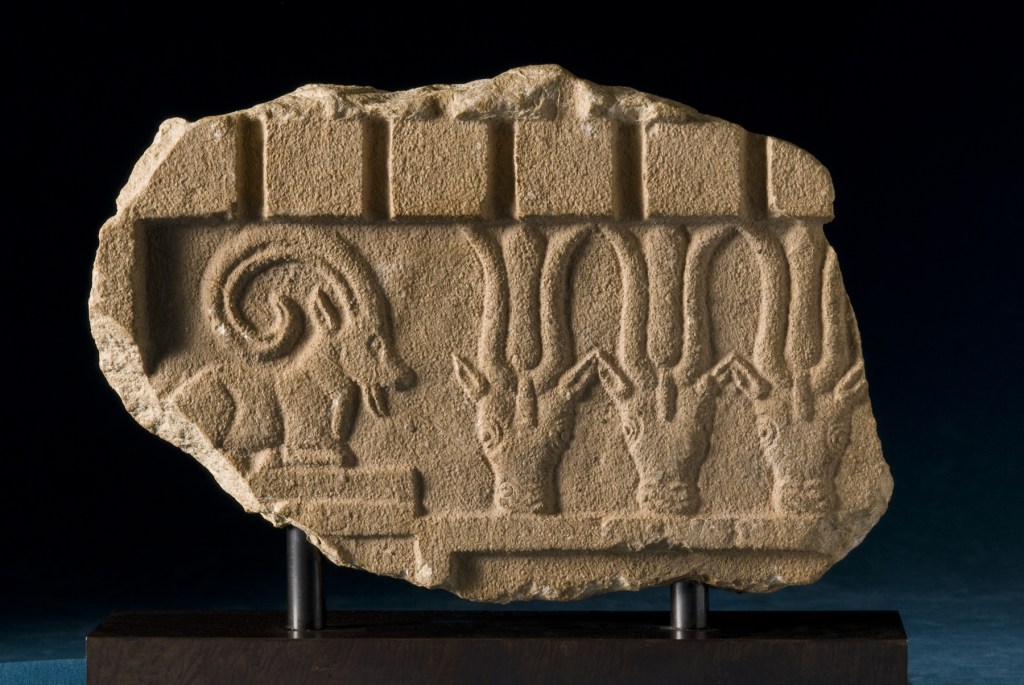
Image: Fragment of a stela depicting a reclining ibex and three Arabian oryx antelope heads. The ibex was one of the most important sacred animals in ancient South Arabia, while the oryx was associated with the moon-god, ‘Almaqah, and the god of Venus, Attar. From Wikipedia.
Tanit – Carthaginian
Tanit was the chief Goddess of the ancient city of Carthage, the ruins of which still exist today in Tunisia.
She is the equivalent of the Goddess Ashtart/Astarte, though Tanit was originally an indigenous Berber Goddess who absorbed some of Ashtart’s aspects from the Semitic Phoenicians.
For those unfamiliar with the Phoenicians, here is a map of their settlements and trade routes, which spanned from the Levant, across the Mediterranean and North Africa, and reached as far as modern-day Spain.
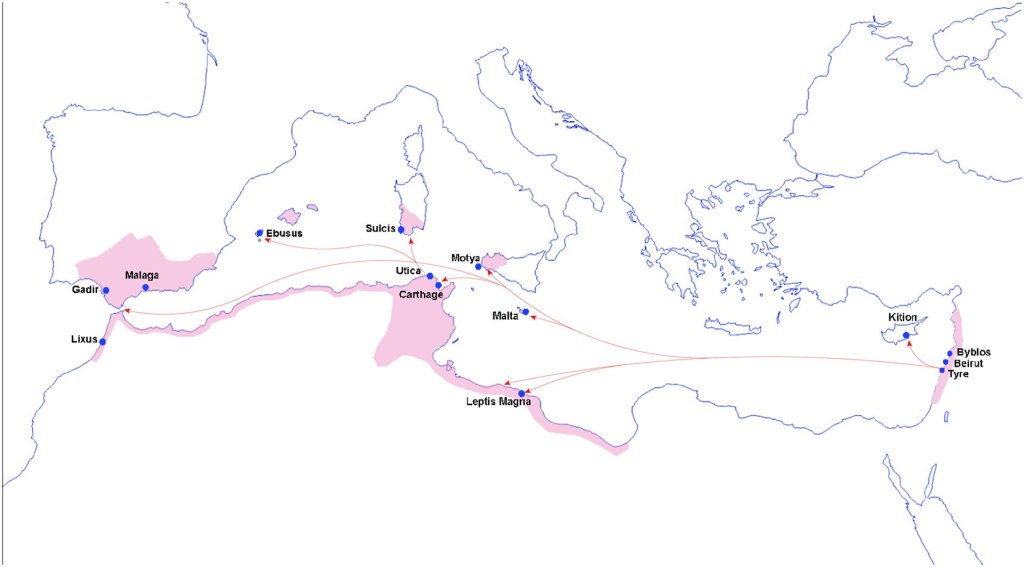
Image: Phoenician settlements are highlighted in pink. From Wikipedia.
Although She is the Goddess of civilisation, wisdom, and crafts, She is also a Mother Goddess who was associated with fertility- at the same time, She is the Goddess of rain, as well as children.
Some sources claim that followers of Tanit and Her husband, Ba’al Hammon, practiced regular, excessive child sacrifice, though all of these accounts came from outside of Carthage.
Greek and Roman works about Carthage are the primary source of “evidence” pointing towards this practice, though it is also possible that it was something done in times of desperation or need, rather than on a regular basis as the Romans would have us believe.
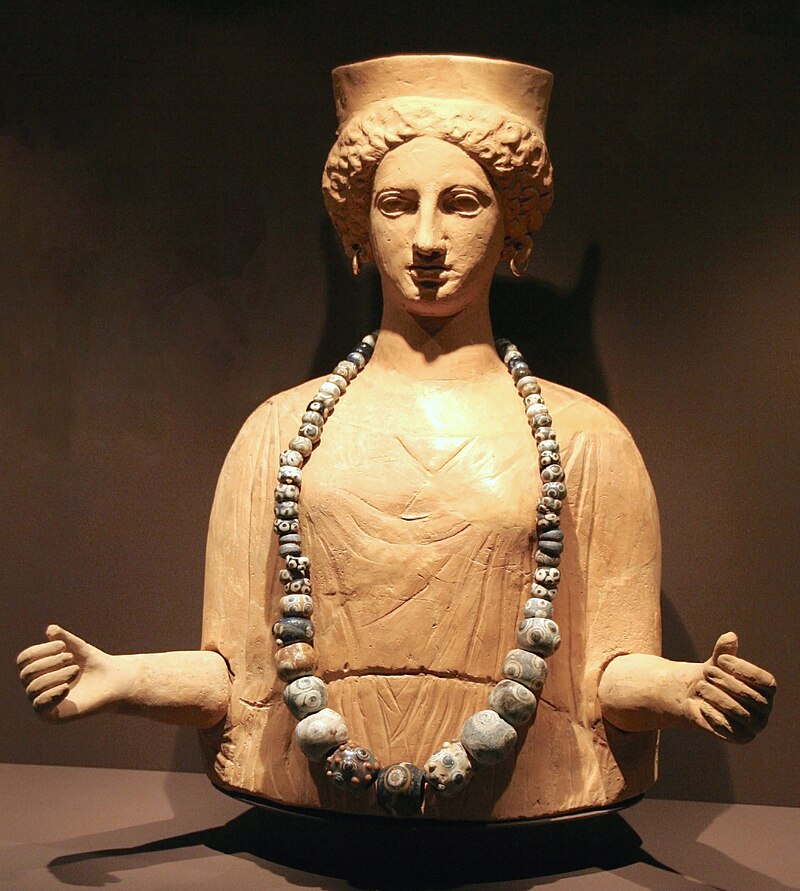
Image: Adorned statue of the Punic goddess Tanit, 5th–3rd centuries BC, from the necropolis of Puig des Molins, Ibiza (Spain). From Wikipedia.
Anat – Canaanite/Egyptian
Anat or Anath is the Canaanite Goddess of battle, warfare, and hunting. Her cult was introduced to Egypt through the Hyksos, people from the Levant who ruled over Egypt for over a hundred years.
Anat is the Sister of the storm God Ba’al, and is one of His staunchest allies; echoing the relationship between Shaushka and Teshub. When Ba’al was killed in conflict by the God of death, Mot, Anat exacted her revenge.
Aided by the Sun Goddess Shapash, Anat resurrected Ba’al, then waged war on all of Ba’al’s enemies. She rejoiced in their slaughter, laughing as She bathed in the blood of Her enemies.
She then proceeded to slaughter Mot, cut Him into tiny pieces, then grinded Him up and sowed Him in the fields.
She is often depicted as a young maiden; although She has been described as a “virgin”, She is closely associated with sex and described to have had many children with Ba’al in later texts. In this case, “virgin” is likely used as an indicator of marital status, rather than sexual purity.
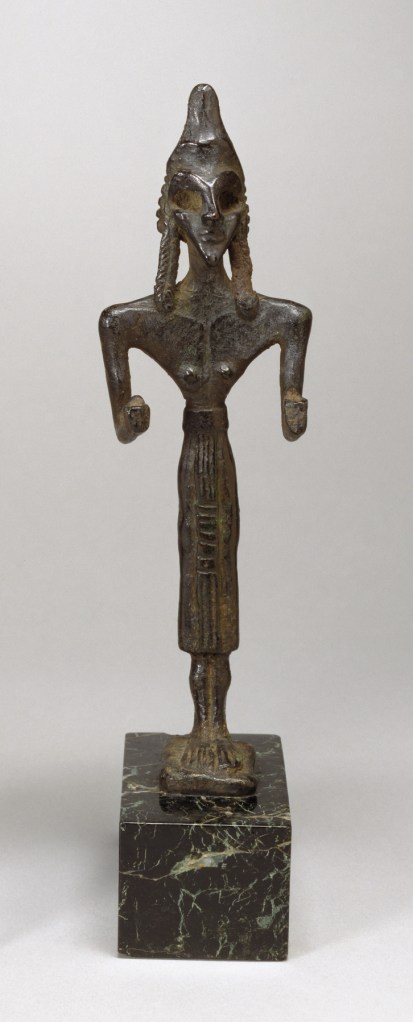
Image: A solid bronze votive statue, most likely of Anat. From Wikipedia.
Qetesh – Egyptian
Qetesh, also known as Qadesh, is an Egyptian Goddess whose development is believed to have been influenced by the religion of Canaan. She is the Goddess of love, sex, ecstasy, and fertility.
Her links to Inanna/Ishtar can be seen in Her iconography; fully nude, standing on top of a lion, depicted as facing forward rather than in the usual Egyptian art style, holding a snake and bouquet of lotus flowers.
Though not mentioned in this post, this pose is also seen in the Goddess Shala; although Shala is also a Mesopotamian Goddess, it is believed that She developed independently of Inanna/Ishtar and adopted some of Inanna/Ishtar’s traits later on due to syncretism.
Qetesh’s epithets include “Lady of Heaven”, Mistress of All the Gods”, “Lady of the Stars of Heaven”, “Great of magic, mistress of the stars”, and “Eye of Ra, without her equal”.

Image: Stele depicting Qetesh in the centre on a lion, with the God Min on the left and the God Resheph on the right. From Egypt Museum.
Ataratheh/Atargatis– Syrian
Ataratheh, more commonly known by Her Hellenised name, Atargatis, was the chief Goddess of the ancient Syrian pantheon, and was regarded as a fertility deity as well as the protector of Her city, Hierapolis (now modern-day Manbij).
Doves and fish are considered sacred to Her; doves representing Her role as a love Goddess, and fish representing Her role as a fertility Goddess.
Also known as Derceto to the Greeks, Atargatis is assumed to have also been a mermaid Goddess with the upper body of a woman and the lower body of a fish. A Greek myth explains how She gained this form; Atargatis fell in love with a human man, and gave birth to a daughter from their union.
She became ashamed of the affair and threw Herself into a lake near Ashkelon, hoping to drown Herself. However, this failed and She instead transformed Herself into a being that was half fish, half woman.
In another myth, Atargatis resented the daughter She had borne and abandoned her in the desert, where she was raised by doves. This child would grow up to be the legendary Assyrian queen, Semiramis.

Image: This statue comes from the Nabatean temple at Khirbet Tannur. Atargatis, the “Syrian Goddess” was a vegetation goddess, responsible for the fertility of the land, and perhaps the sea as well. Here, the goddess emerges from a profusion of vines, fruits, and other vegetation. Photo by Dennis G. Jarvis. From Wikipedia.
Aphrodite – Hellenic
Arguably the most well known of the deities listed here, Aphrodite emerged after Greeks adopted the worship of Ashtart/Astarte from the Phoenicians and renamed Her.
Though some ancient scholars such as Hesiod claimed that Her name derives from the Greek word aphrós, or sea-foam, modern scholars disagree.
Aphrodite is commonly known as the Greek Goddess of love, lust, beauty, and pleasure, but She also had war-like aspects, especially in Sparta. She was known as Aphrodite Areia, meaning war-like, and Her earliest depictions in Sparta depict Her as bearing arms.
As time passed, Aphrodite’s role as a war Goddess was soon eclipsed by Her role as a Goddess of beauty and love.
One of Her epithets, Ourania, means heavenly; linking Her to Inanna’s title as Queen of Heaven.

Image: Venus Genetrix (or Aphrodite Genetrix), Roman marble copy of a Classical Greek statue by Callimachus, c. 475 bce; in the collection of the Louvre, Paris. From Britannica.
Venus – Roman
Venus, mostly known as the Roman equivalent of Aphrodite, is the Goddess of love, beauty, sex, desire, fertility, and victory.
Similar to the syncretism between Inanna and Ishtar, Venus and Aphrodite were distinct deities in the beginning; however, Venus took on many of Aphrodite’s characteristics and the two have come to be regarded as the same Goddess.
Prior to Her association with Aphrodite, Venus did not have a particular origin myth. Post-association, She is described to have been born, fully formed, from sea foam after Caelus (in Greek, Ouranos) was castrated and had his genitals cast into the sea.
As a noun, the Latin venus means love or charm.
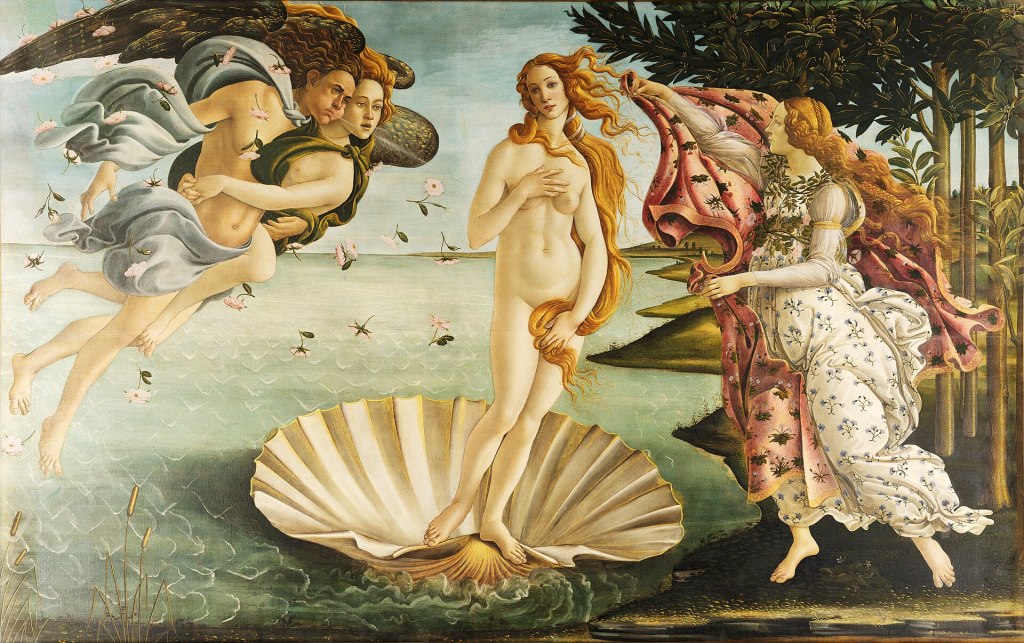
Image: The Birth of Venus by artist Sandro Botticelli. From Wikipedia.
Turan – Etruscan
The connection between Inanna and Turan is more convoluted, but is there nonetheless. Through trade and association with the Phoenicians and Greeks, the Etruscans of Italy were introduced to Mesopotamian ideas and concepts. Turan was likely influenced by Aphrodite, who in turn was influenced by Ashtart/Astarte, who was in turn influenced by Inanna.
Like Inanna, Turan is the Goddess of love, fertility, and beauty, and is commonly depicted as a young, winged woman. However, She was originally depicted as luxuriously clothed and with many jewels; it was after being influenced by Hellenistic art that She began to be portrayed as nude.
Turan was also the Patroness of the city Vulci.
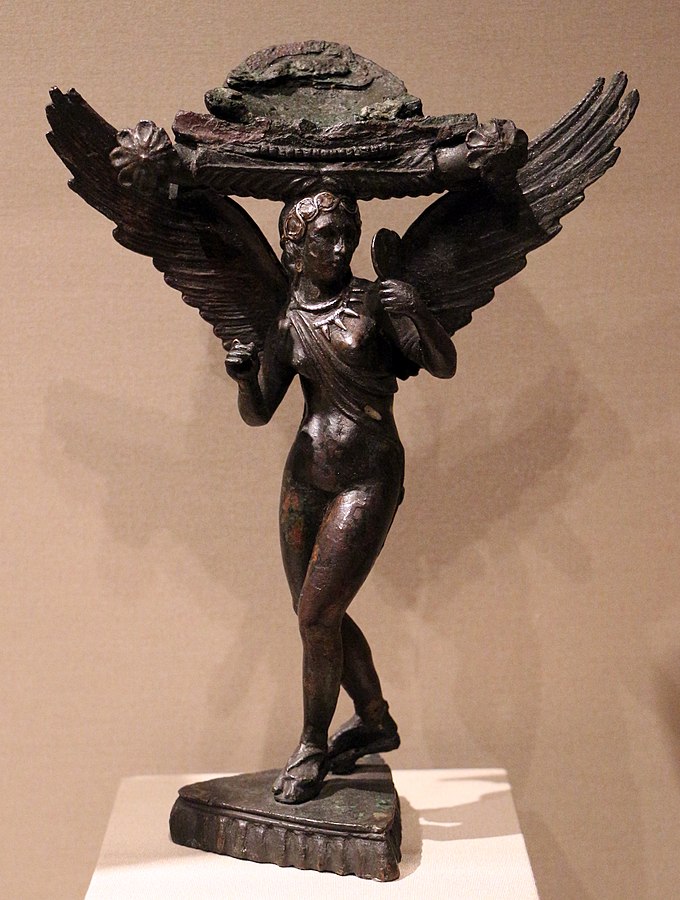
Image: A bronze patera support, possibly of Turan. From Digital Maps of the Ancient World.
Isis – Egyptian/Hellenic
Like the relationship with Turan, Inanna’s association with Isis is less direct, but still profound.
The earliest signs of Inanna’s influence can be traced to the introduction of Anat, Ashtart/Astarte, and Qetesh into the Egyptian pantheon. From these three deities, Isis would absorb some of their traits, such as Her magical abilities and cosmic power.
Later impact occurred during the Hellenistic and Roman periods of Egyptian rule, where Isis became a popular Goddess throughout the Mediterranean and was in turn syncretised with several other Goddesses.
In the aretalogies prescribed to Her, Isis describes Herself as “the Universal Mother, Mistress of all the Elements, Queen of Heaven”, among many other titles. In Christianity, Isis would influence the development of Mary, mother of Jesus.

Image: Isis wall painting in the tomb of Seti I. From Wikipedia.
Pinikir – Elamite/Hurrian
Pinikir is believed to have originated with the Elamites, whose language is considered a language isolate just like Sumerian.
Little is known about Pinikir, but She is assumed to be an astral deity, and the Goddess of sex and love. She is closely related to Ishtar, was called the “Queen of Heaven” by the Elamites, and was possibly associated with the planet Venus.
In Hurrian sources, Pinikir’s gender is undetermined- similar to Shaushka. She has been depicted as both a God and Goddess.
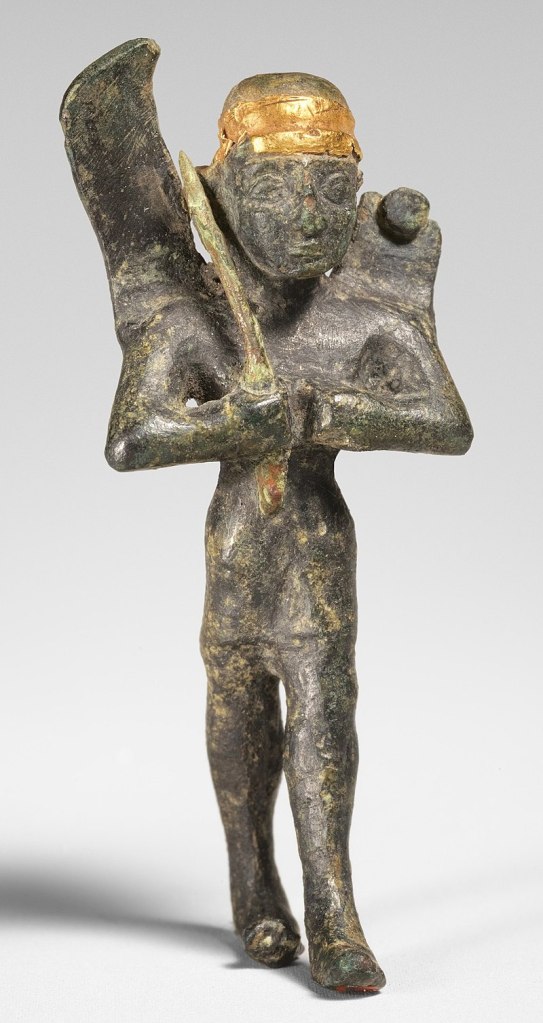
Image: Figure of a winged Hittite deity, most likely Pinikir, identified based on similarity to a relief from Yazılıkaya. From Wikipedia.
Last edited: August 7, 2025
✦ . ⁺ . ✦ . ⁺ . ✷ . ⁺ . ✦ . ⁺ . ✦
Note: These deities are not be treated as mere extensions of Inanna/Ishtar, but as independent deities with Their own worship, cults, and practices.
Additionally, the contents of this post should not be treated as the absolute truth; information varies according to the source, and mythology, its timelines, and relationships between deities do not always follow the same narrative.
 temple of eanna | 𒂍𒀭𒈾
Leave a comment